

After an 89-win season and the team’s first playoff berth since 2021, it appeared the Boston Red Sox would be big-time buyers this offseason. While the front office has made some minor roster improvements, most notably two trades with the St. Louis Cardinals for starting pitcher Sonny Gray and first baseman Wilson Contreras, the team has yet to sign a single free agent. This lack of action has worried Boston fans such as myself, who want ownership to spend on veterans to improve the roster and help guide the team’s young prospects.
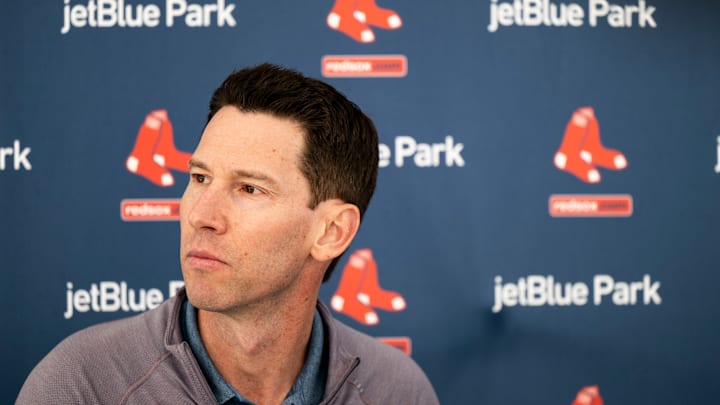
This trend of not spending has become a frustrating pattern. Even last offseason, when Chief Baseball Officer Craig Breslow was celebrated for his aggressiveness, his biggest acquisition was a trade with the Chicago White Sox for eventual AL Cy Young award finalist Garrett Crochet. Even though some of the best free agents are still available on the open market, most notably last year’s third baseman Alex Bregman, the days of Boston flexing its big market power appear to be over. Instead, the team seems content with winning on the margins and letting its premier prospects lead.
In the hyper-competitive AL East, conservative offseasons are routinely punished. While Boston has remained quiet, its division rivals have not. The Toronto Blue Jays bolstered their rotation by poaching Dylan Cease away from the San Diego Padres on a seven-year, $210 million contract. For a team that was the American League’s representative in last season’s World Series, the move solidifies Toronto as a legitimate World Series threat once again this season. Toronto is not the only division rival making headlines this offseason, as the Baltimore Orioles signed projected Red Sox free agent target first baseman Pete Alonso from the New York Mets to a five-year, $155 million contract.
With Spring Training beginning next month, Boston’s roster remains far from complete. The roster lacks veteran leadership and is too reliant on young position players, leaving thin margins for error. That approach places enormous pressure on unproven contributors and exposes the roster’s thin depth should injuries inevitably arise over a 162-game long season.
The offseason is not beyond repair, but the runway to fix it is shrinking fast. If Craig Breslow and the front office want to focus on winning and building on last season’s wild-card berth, urgency must replace patience. Otherwise, this winter will be remembered less for what Boston added and more for what the team chose not to do.
More Boston Red Sox News and Rumors:
 Add us as a preferred source on Google