

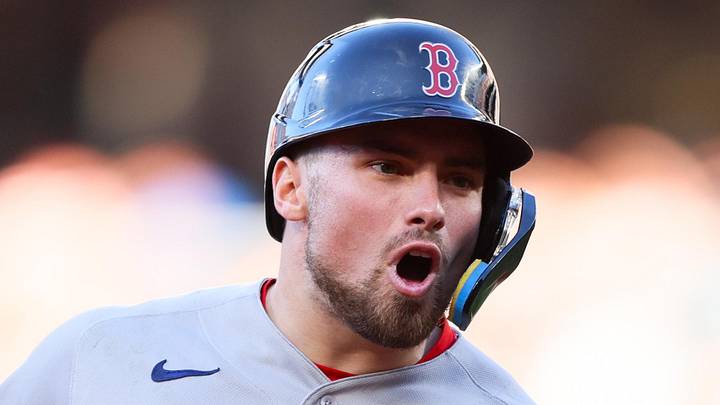
Caleb Durbin's first season with the Boston Red Sox didn't begin the way either side had envisioned. Acquired to help solidify the infield, the 26-year-old infielder had struggled to find any offensive rhythm through the opening two months of the season, raising questions about whether he could hold onto an everyday role.
Through his first 48 games, Durbin slashed just .169/.248/.246/.495 with only one home run while recording more strikeouts (25) than hits (24). Although his defense at third and his aggressive baserunning remained valuable, Boston needed more production from the bat. Instead of letting the slump snowball, however, Durbin went back to work.
The turnaround started with a series of mechanical adjustments to his swing. Durbin explained that he wanted to "stay within myself," emphasizing staying inside the baseball and driving the ball back through the middle of the field instead of trying to do too much. He also made subtle changes to his setup while specifically working on attacking the two-seam fastballs during extra batting cage sessions.
Caleb Durbin looks like a completely different player
Those adjustments have already begun paying dividends.
Originally, he started with his knees bent with his front foot behind his back foot. When he strided, he had a huge leg kick with his bat flicked down, touching his shoulders. When the pitch came, Durbin brought his bat back up over his shoulders, planted his front foot, then drove the ball. It worked against the offspeed, but not against the fastballs, especially up and in. After he swung, his follow-through depended on whether the pitch was outside (one-handed) or inside (two-handed).
But now, he's chosen to stay more upright with his feet parallel to each other. His bat is more upright as well, completely taking out that extra step when he strides, where he flicks his bat down. Now, he's more ready, and when he strides, he's more stable and can keep his balance. He has a shorter and more compact swing and can now commit to the two-handed follow-through. This helps him get ahead of those inside two-seam fastballs that he struggled with.
As Durbin himself said, he wanted to get ahead and attack "the right side of the ball, staying inside it".
“I'm staying inside it. Even when you're pulling, you have to attack the inside part of the ball to kind of get good spin. You’re not going to hit it perfectly every time. But that’s when your misses on the wrong side of the ball are still hits to left, or top-spun, but they’re still hits. For me, it's just getting back to attack on the ball the right way, and the results have been better," Durbin said.
Caleb Durbin is proving what the Red Sox need to see
Overall, his ground ball rate had dropped from 57.9% to about 40%, and he is hitting more line drives and fly balls. Not only this, but he's hitting more doubles and triples because he was finally getting the ball in the air instead of pounding it into the ground.
Baseball is and always will be a game of adjustments. It's how prospects develop, and it's how players try to get better against others and stay consistent. For Durbin and the Red Sox, his resurgence helps a lot, even if Boston isn't doing a lot of winning these days. He's already re-establishing himself as an everyday third baseman that the Red Sox envisioned when they acquired him last offseason, which is a consistent and reliable contact hitter with great speed and defense.
Not only that, but it's changed the trajectory of his season, and we couldn't be any prouder.
 Add us as a preferred source on Google